Monthly Archives: October 2011

Tell Your Story

My Halloween Costume by

grace2

On the cover of Grace Jones’ Nightclubbing, the new wave, post-punk, dub pop artist isn’t made-up. No, she’s covered, totally painted in dark blue metallic paint, a blue-black island sheen that echoes her Armani jacket. It was that image – and, more importantly, that decision to paint Grace, to cover her up and create a new, hyper-signification of race as this absurd, mythic ideal – that led me to pick this cover as a Halloween costume. I was in undergrad, just having transferred to an art school with a wild Halloween reputation. “This,” I thought, “ought to make an impression.” And so began an annual series of appearances as Ms. Jones. More…

Gay New York

The World According to Tusk by

RNR Fag Bar Go-Go Dancers

Tuesday nights in the late ’80s meant Dean Johnson’s Rock and Roll Fag Bar at the World. Getting near the corner of Avenue C on 2nd Street back then involved passing a gauntlet of thin, aggressive guys offering heroin and it’s accoutrements: “need works?” they asked, “horse?” Or, “scag?” It wasn’t uncommon to see society’s dregs lying in doorways with a syringe dangling from their arm, blood dribbling out of the puncture. Dodge a crack head or two on the way, some beggars, a guy pissing against a tenement, and for your effort a gay paradise awaited. More…

News & UpdatesThe Movie

Director’s Commentary Part 2 by

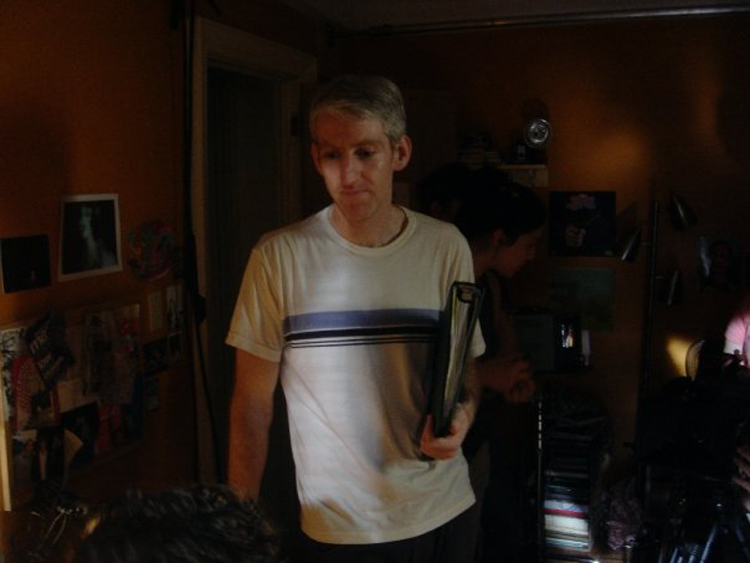
In the second part of my in-depth interview with director Ira Sachs, conducted prior to the filming of Keep The Lights On, I asked Sachs about something we’ve devoted a whole section to on our site: the way autobiography intersects with our art-making process. Sachs also discusses another autobiographical film that influenced him, as well as how his decision to live “as transparently as possible” led to him writing the film. It’s interesting to consider Sachs’ responses, which seem so assured and confident, coming after his dramatic production diary post from last week where he realized, upon watching a first cut, that the film was definitely him. To my mind, it shows that the work involved in opening yourself up in the creative process is constantly evolving as one’s autobiography.


Gay New York

The Return of Vito Russo by

vito

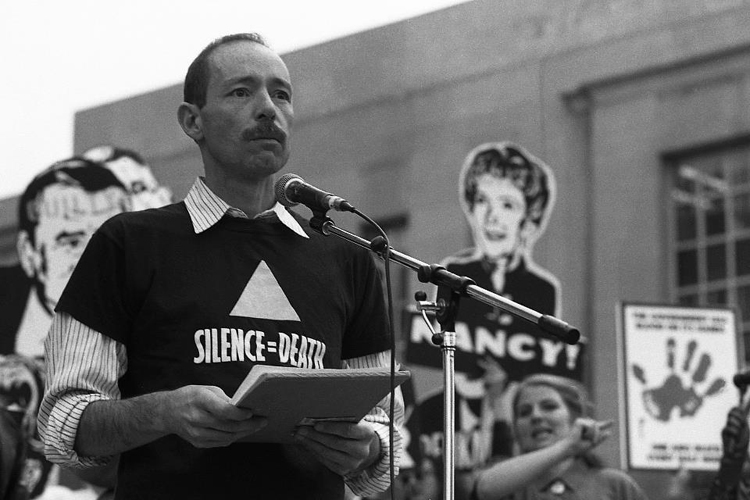
It’s been 16 years since the documentary version of The Celluloid Closet, activist Vito Russo’s landmark book about gay representation in film, was released in theaters. Vito spent nearly his whole life watching films, screening them for others and helping to explain how film perpetuated stereotypes about gay and lesbian people in film. Tonight, Vito returns to theaters as the star of the film, rather than a spectator. Jeffrey Schwartz’s eagerly-anticipated documentary Vito, which explores Vito’s life as a cinephile activist as well as an important AIDS activist will screen at 6PM and 9:15PM at the Walter Reade Theater as part of the New York Film Festival. The screening is sold out, but there are rush tickets available for both screenings. The film features interviews with Lily Tomlin, Armisteaud Maupin, and many of Vito’s closest friends and colleagues. Don’t miss it.

http://www.filmlinc.com/films/on-sale/vito

Production Diary

Day 133: A Piece Of Meat by

keepthelightsonedit

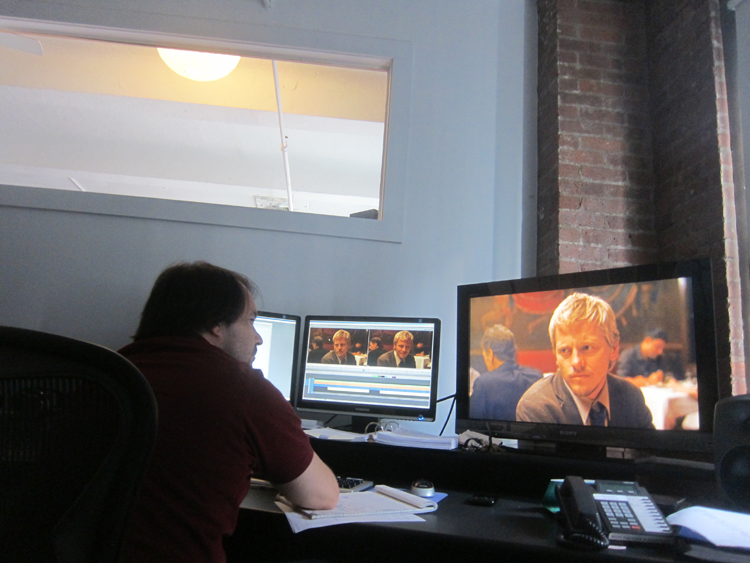
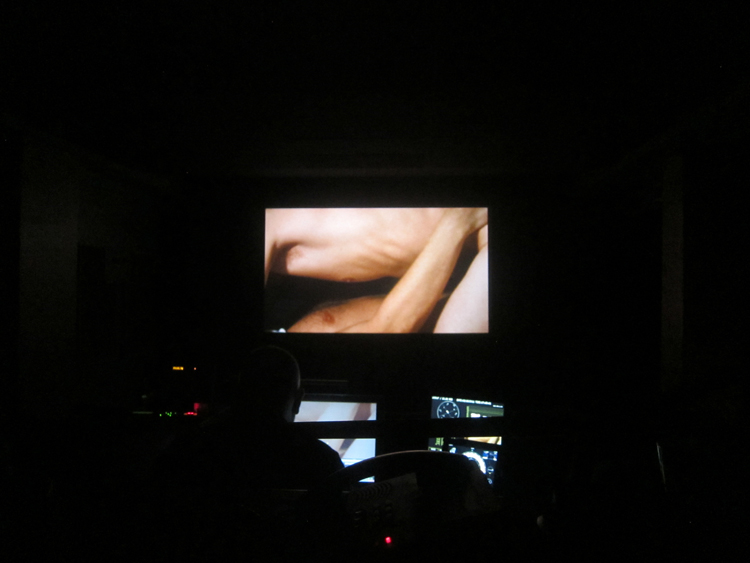
I guess its been a long time, because I forgot the ups and downs of editing, and how vulnerable it can feel. You are on a high, riding through the cutting, the scenes falling into place, and then you are opening the door, and you let people in — damn their opinions, the movie they are making in their head, as opposed to yours — and suddenly crash, bang, boom, and you wake up feeling like its the end of the world. And then the next day, you are back at it, in the middle, everything that was set becomes un-set, all the smooth cuts that you were impressing yourself with, you break apart, and then the roughness is back. The thing becomes alive again. More…

Avery Willard

Reflections by

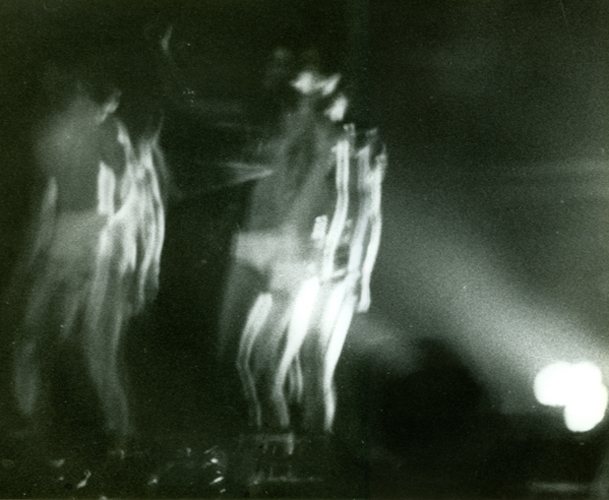
The following clip is taken from Avery Willard’s 1966 experimental short, Reflections, starring Paul Ritchards. Here we see Willard’s keen implementation of double exposure, a recurring technique in his film work. As the camera moves elegantly across Ritchards’ body, abstract, superimposed images of New York City drift in and out of frame. The urban landscape begins to align with the landscape of the male physique. Provocative and hypnotic, Reflections calls to mind the mid-60s work of fellow avant-garde filmmakers like Kenneth Anger, Bruce Baillie, Tom Chomont, and many others.

Art & Autobiography

Untitled (The Istanbul Biennial, 2011) by

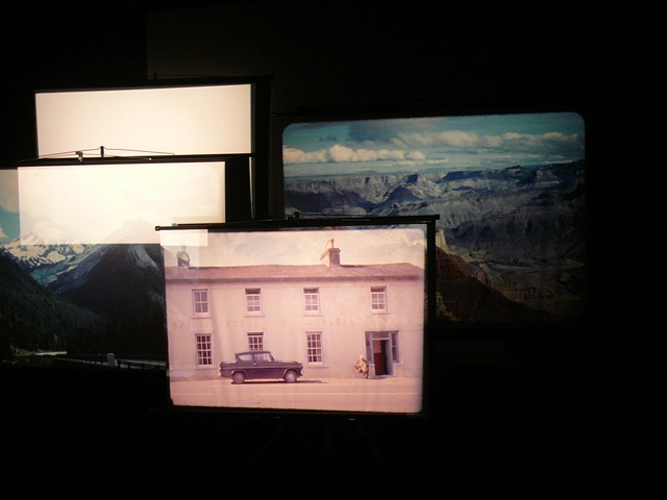
Vesna Pavlovic's "Search for Landscapes"

A mountain of 175 pounds of candies “individually wrapped in variously colored cellophane” piled up in the corner of a gallery. The candy is unguarded, so the viewer is encouraged to take some. Each and every day, the remaining candy is weighed and more is added until the pile goes back to the same 175 pounds. This is Untitled (Ross), one of the most poignant works by Felix Gonzales-Torres, the Cuban American artist who lived and worked in NYC in the ’80s and early ’90s. This beautiful installation underscores the process as an intrinsic part of the art piece, which is constantly being re-created, and never finished.

175 pounds corresponds to the “ideal” weight that a doctor established for his patient Ross Laycock, the artist’s partner, when he was diagnosed with AIDS in the mid-80’s. Gonzales-Torres was once asked who his ideal audience was, and he answered without skipping a beat; “My audience is Ross.” Ross died in ’91. The diminishing amount of candy parallels Ross’ suffering and weight loss prior to his death, but the replenishment stipulated by the artist metaphorically grants him eternal life. More…

Gay New York

More Than Ever by

Tony Osso’s The Devotion Project is a series of short films that aims to document LGBT couples “of all stripes” according to the project’s website. Osso’s first endeavor More Than Ever is a simple and touching portrait of an older gay couple, Bill Campbell and John Hilton, in their 54th year of being together. It’s a sweet reminder, amidst Grindr and Manhunt and the breakups we all must go through that sometimes things can work out for us. More Than Ever won the Audience Award for best short film at this year’s NewFest. Osso is currently filming new installments of the series around New York. Enjoy.

Production Diary

Day 126: The Best Places to Scratch Your Film by

keepthelightson-filmscratch

It feels like Christmas. After a two-week pause—somewhat unexpected, but these things happen—I’m back in the editing room this morning for the first time in weeks. What I have noticed in the meantime is how much more stressful real life is than working on a movie. I’ve missed the single-minded focus that it gives you, and also the way in which all the rest of life seems to disappear when you allow the tunnel vision, which is a movie. I begin to think that “workaholism” is not a ridiculous term, if you make the comparison to how work, like all the other “isms,” can sometimes be the best relief to the anxieties of everyday. I’ve indulged in worse vices in my life, but in this decade, this one seems to be front and center. More…

Art & Autobiography

WTC View: My Autobiography of New York After 9/11 by

Brian Sloan on WTC View set

On the night of September 10th, 2001, I placed a roommate ad on the Village Voice website for my 2BR share in the West Village. The next morning I woke up to emergency sirens and witnessed the attack on the World Trade Center from my bedroom window. After a harrowing day, I left my apartment to stay at my boyfriend’s place in Brooklyn. Then, a few days later when I called my machine (remember doing that?) to get messages, there were a number of people who had called asking about my roommate ad. Some people even called me the day after 9/11, casually asking if they could “stop by and see the place.”

This was the strange but true story that was the inspiration for my first full-length play and later feature film, WTC View. It tells the story of a man who, like myself, placed a roommate ad for his apartment on September 10th. Because of this fact, people often mistake the play for being autobiographical. This is a situation that I’m somewhat familiar with because it’s happened before with other works of fiction and films I have written. In some ways, I find this flattering because I think it means people find the story so believable and real that it must be true. However, I also find it somewhat annoying because it assumes I just write down everything that happens to me and that there is little imagination involved in my writing. Still, the burning question remains…is it true or not? Is this the story of your life? Well, here’s my attempt at an answer. More…